
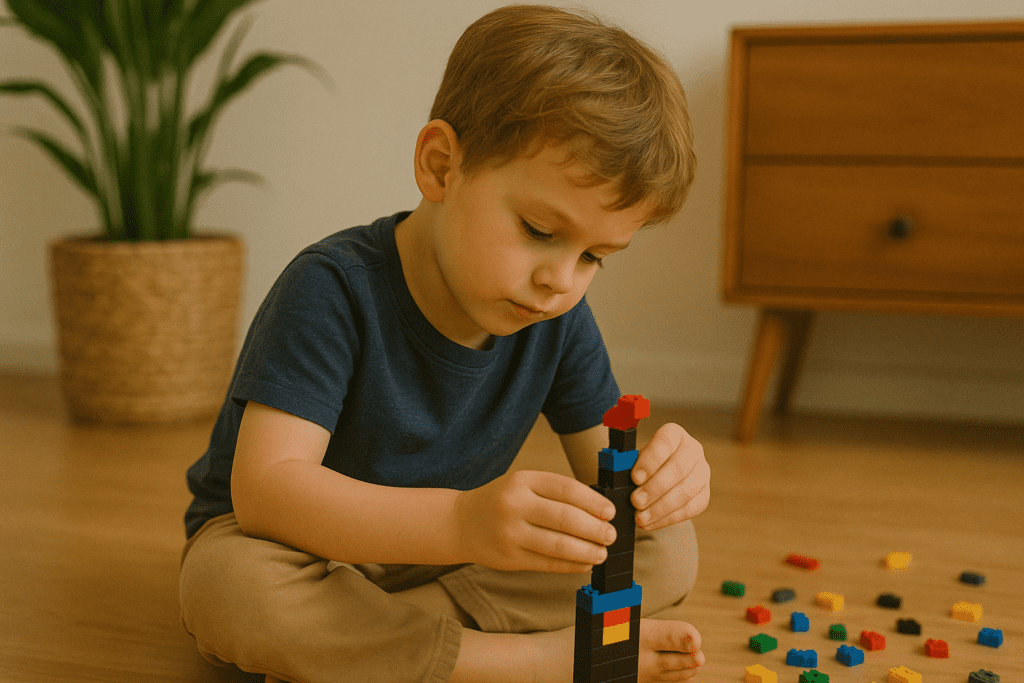
Screens are everywhere. Tablets, phones, televisions, and computers have become part of daily life for many children — often earlier than we’d like. While technology has its place, excessive screen time can crowd out opportunities for movement, creativity, social interaction, and deep learning.
This is where Six Bricks Learning offers a powerful alternative.
The Six Bricks Method draws children away from screens naturally — not by restriction, but by engagement. Through hands-on, playful challenges, children become immersed in learning that feels fun, active, and meaningful.
The Growing Problem with Screen Time
Parents and educators worldwide are increasingly concerned about the effects of prolonged screen exposure. Research consistently links excessive screen time to:
- Reduced attention and concentration
- Poor sleep quality
- Limited physical movement
- Delayed social interaction
- Fewer opportunities for creative play
Perhaps most importantly, screens often encourage passive consumption, whereas young children learn best through doing, building, touching, and interacting.
What Is the Six Bricks Method?
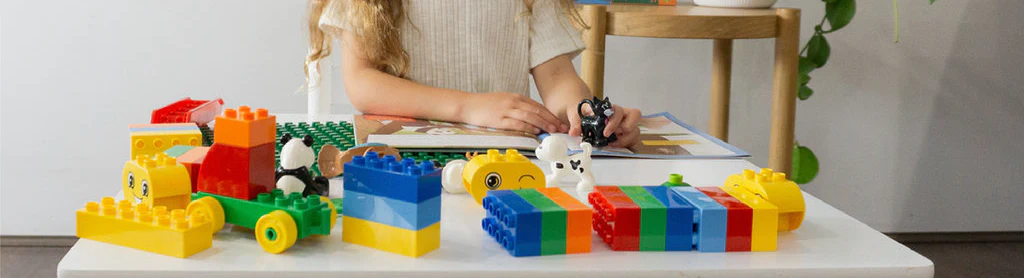
The Six Bricks Method is a hands-on learning approach that uses six brightly coloured DUPLO®-sized bricks to support development across multiple domains.
Originally developed in South Africa by Care for Education and later endorsed by the LEGO Foundation, the method is now used globally in homes, early learning centres, and primary schools.
Despite its simplicity, Six Bricks is remarkably powerful — supporting:
- Cognitive development
- Literacy and numeracy foundations
- Emotional regulation
- Social skills
- Fine and gross motor development
- Spatial and perceptual skills
And all of this happens through play — not worksheets or screens.
Why Six Bricks Works So Well Without Screens
Children are naturally drawn to colour, movement, and challenge. Six Bricks leverages this instinct by offering playful tasks that activate curiosity and focus.
Each activity is short, purposeful, and engaging — perfect for today’s children who benefit from frequent, meaningful learning moments rather than long, passive sessions.
Because activities are physical and interactive, children quickly forget about screens altogether.
The Role of Colour and Manipulation in Learning
The six distinct brick colours (red, yellow, orange, green, light blue, and dark blue) are not just visually appealing — they are central to how children learn.
Using the bricks, children naturally develop:
- Visual discrimination and memory
- Spatial awareness and positional language
- Perceptual skills
- Mathematical concepts such as sequencing, patterning, and comparison
- Fine motor control and bilateral coordination
This concrete, hands-on experience supports deeper learning than abstract, screen-based interactions.
Core Six Bricks Activities That Replace Screen Time
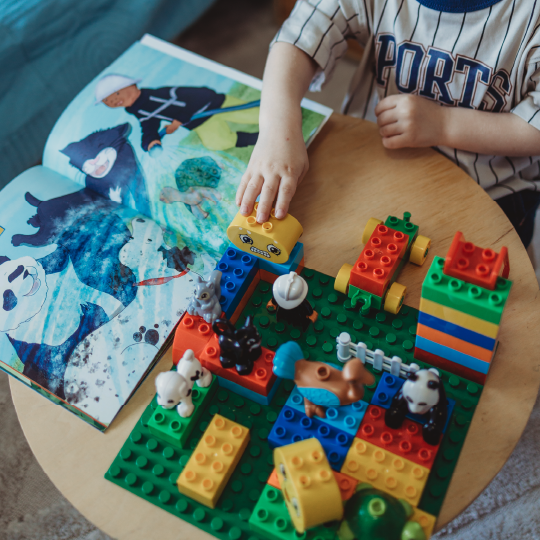
Six Bricks includes hundreds of quick activities that can easily replace screen-based entertainment.
- Sorting and Matching: Builds categorisation, language, and early maths skills
- Building and Stacking: Strengthens fine motor skills and introduces positional language
- Memory and Sequencing Games: Supports working memory using a concrete–pictorial–abstract approach
These activities typically take 2–10 minutes, making them ideal for transitions, brain breaks, or short learning bursts at home or school.
Developmental Benefits of the Six Bricks Method
Cognitive Development
Six Bricks challenges children to think, plan, test, and adjust. These tasks strengthen problem-solving, reasoning, and flexible thinking — key skills for lifelong learning.
Social and Emotional Learning
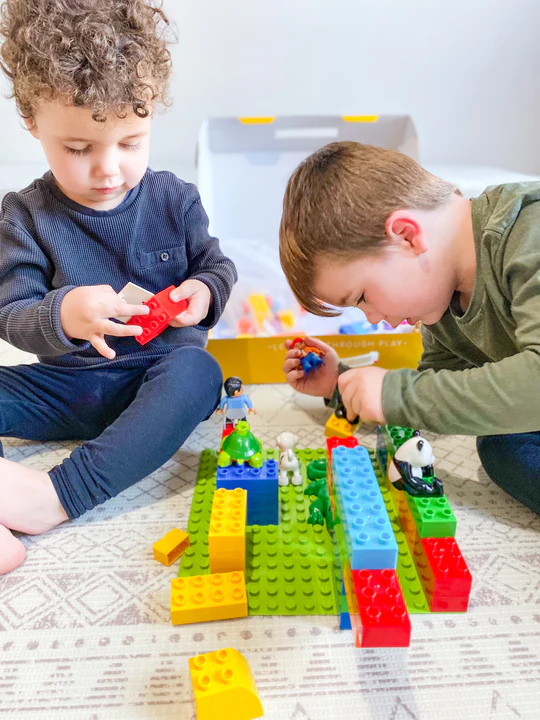
When used in pairs or groups, Six Bricks encourages:
- Turn-taking
- Cooperation
- Communication
- Emotional regulation
- Empathy and resilience
Physical and Motor Development
Handling the bricks improves:
- Fine motor strength
- Hand-eye coordination
- Core stability
- Gross motor engagement
Additional tools (such as pegs or movement-based challenges) can be integrated to further support holistic development.
Using Six Bricks at Home to Reduce Screen Time
Practical Tips for Parents
- Schedule screen-free moments using Six Bricks as a replacement, not a punishment
- Play together — shared activities deepen learning and connection
- Encourage experimentation — mistakes are part of the learning process
- Keep activities short — consistency matters more than duration
Creating a Play-Friendly Environment
- Store bricks where children can easily access them
- Use Six Bricks during routines (before dinner, after school, morning warm-ups)
- Rotate activities to maintain curiosity and challenge
Evidence from Schools
Educators who use Six Bricks regularly report:
- Increased engagement and focus
- Improved classroom behaviour
- Stronger collaboration
- Better transitions between activities
Teachers value the method’s simplicity and flexibility — one small set of bricks delivering broad developmental outcomes.
Key Takeaways
- Excessive screen time limits active learning opportunities
- Six Bricks offers a compelling, screen-free alternative
- Activities support cognitive, social, emotional, and physical development
- Short, playful tasks fit seamlessly into home and classroom routines
- Children remain engaged without feeling “taught”
FAQ
What age group is Six Bricks suitable for?
Primarily ages 3–7, with easy adaptations for older children and diverse learners.
How long should Six Bricks sessions be?
Short sessions of 10–15 minutes are ideal and highly effective.
Can Six Bricks replace screen time completely?
It can significantly reduce reliance on screens by offering an engaging alternative.
Is Six Bricks inclusive?
Yes. Activities are adaptable for children with different abilities, including autistic children.
Does Six Bricks align with curriculum goals?
Absolutely — it supports EYLF, NQF, and early primary learning outcomes.
About the Author
Six Bricks Learning supports educators and families with playful, research-informed strategies that nurture confident, capable learners through hands-on experiences.
Boost Real Learning Today
Ready to reduce screen time and boost real learning? Explore our Six Bricks Educator Kits, Training Courses, and Activity Guides and join a global community committed to learning through play.
Explore Six Bricks Resources