
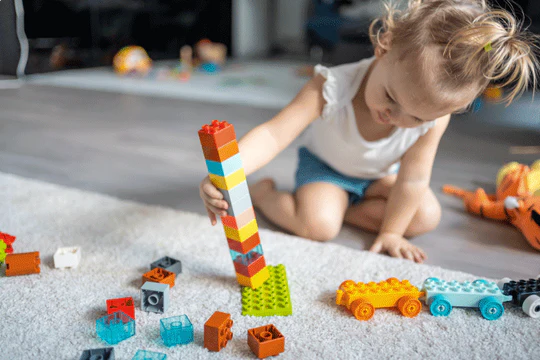
Playful learning is one of the most effective ways to support children’s development — especially during the early years. When learning feels like play, children engage more deeply, experiment freely, and build essential skills without pressure.
For children aged 3–6, playful learning at home strengthens cognitive, physical, social, and emotional development, while also introducing early literacy and numeracy concepts in meaningful ways.
With simple tools like the Six Bricks Method, families can transform everyday moments into rich learning experiences — no screens, worksheets, or formal lessons required.
Why Playful Learning Is Essential
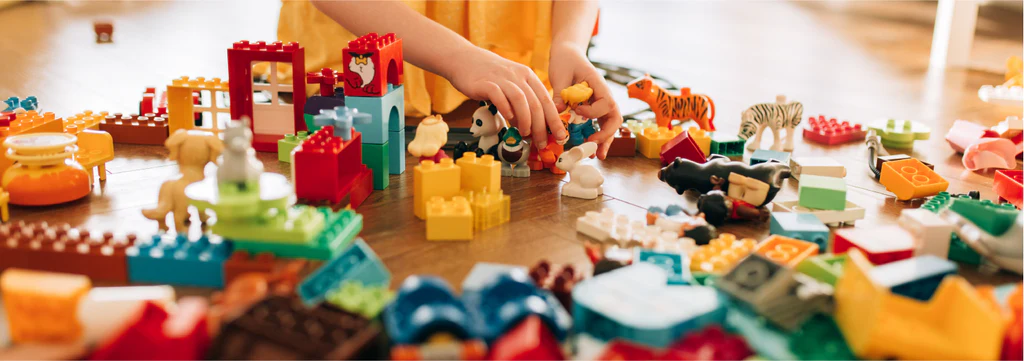
Playful learning blends hands-on activity with intentional learning outcomes. Rather than separating play and education, it combines them — creating experiences that are enjoyable, purposeful, and developmentally aligned.
Research consistently shows that learning through play supports:
- deeper understanding and retention
- emotional regulation and resilience
- creativity and flexible thinking
- motivation and confidence
Most importantly, playful learning allows children to develop core skills without the stress of traditional instruction. Children don’t feel like they’re being taught — yet learning is happening constantly.
The Developmental Benefits of Playful Learning
Cognitive Development
Activities such as building, sorting, and problem-solving help children develop:
- critical and creative thinking
- early numeracy and pattern recognition
- memory and attention
- curiosity and persistence
Exploration and experimentation create the foundations for lifelong learning skills.
Social and Emotional Growth
When children play with family members or peers, they practise:
- cooperation and turn-taking
- empathy and communication
- emotional awareness and self-regulation
Storytelling, collaborative games, and shared challenges strengthen executive functioning skills, which are essential for school success.
Physical Development
Playful learning supports both fine and gross motor skills:
- Fine motor skills develop through stacking, building, drawing, and manipulating objects
- Gross motor skills grow through movement-based play such as jumping, hopping, and obstacle courses
This holistic approach supports curriculum outcomes while keeping children active and engaged.
Language and Communication Skills
Language develops naturally through play. Role-play, storytelling, and hands-on challenges encourage children to:
- expand vocabulary
- practise expressive language
- improve listening and comprehension
Counting bricks, describing patterns, and narrating creations introduce mathematical and literacy concepts in a playful, accessible way.
How to Incorporate Playful Learning at Home
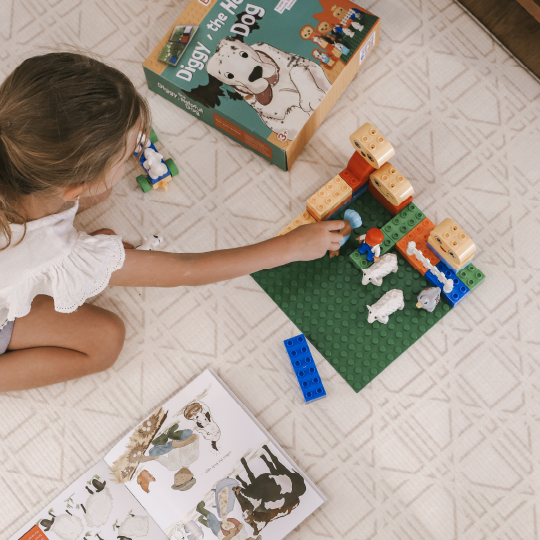
Playful learning doesn’t belong only in classrooms — it works beautifully at home too. All of the activities below are inclusive and adaptable, including for autistic children.
- Building with Bricks: Using bricks as a learning tool allows children to create patterns and structures (spatial awareness), solve challenges such as building the tallest tower, and tell stories inspired by their creations. These activities combine problem-solving, creativity, and language development.
- Interactive Storytelling: Turn reading into an immersive experience. Use Build-a-Book resources to act out stories with manipulatives and encourage children to retell stories or invent new endings. This strengthens comprehension, sequencing, and imagination.
- Outdoor Learning Adventures: Learning thrives outdoors. Hopscotch, obstacle courses, and scavenger hunts build gross motor skills, while counting steps or sorting natural objects introduces maths concepts naturally.
- Art and Creative Play: Set up an art space where children can use bricks as paint stamps to create patterns, draw, collage, and experiment freely. Art supports self-expression, fine motor control, and creativity.
- Family Talent Shows: Create opportunities for children to showcase building creations, tell stories, or explain designs. These experiences build confidence, communication skills, and social connection.
The Role of Six Bricks in Playful Learning
The Six Bricks Method, developed by Care for Education and endorsed by the LEGO Foundation, is a simple yet powerful approach to learning through play. With just six brightly coloured bricks, children can engage in hundreds of short, purposeful activities that support cognitive development, social-emotional learning, fine and gross motor skills, and literacy and numeracy foundations.
While widely used in schools, Six Bricks is equally effective at home. Families often notice improvements in attention, problem-solving, language use, and emotional regulation within a short time.

Examples of Six Bricks Activities at Home
- Memory Match – replicate a brick sequence from memory
- Story Prompts – assign meanings to colours and create stories
- Maths Play – counting, adding, and subtracting bricks
- Colour Hunt – match brick colours to objects around the house
Benefits of Six Bricks for Children’s Educational Growth
- Cognitive growth: stronger memory, focus, and reasoning
- Fine motor development: improved dexterity and control
- Social skills: teamwork, communication, empathy
- Emotional growth: resilience, confidence, adaptability
All achieved through short, playful, engaging activities.
Practical Tips for Parents
- Build Six Bricks into daily routines
- Let your child lead the play
- Combine Six Bricks with other hands-on tools
- Follow your child’s interests (maths, stories, building, movement)
When bricks are taken out of cupboards and used intentionally, learning becomes effortless and joyful.
Turning Holidays into Learning Adventures
Playful learning transforms holidays into opportunities for growth. With Six Bricks, everyday moments become meaningful experiences that support school readiness, emotional wellbeing, and confidence. Through play, children grow — and they enjoy every step of the journey.
Homeschooling with Six Bricks
Six Bricks can be mapped directly to Early Learning and Primary curriculum outcomes, making it an ideal tool for homeschooling families. With simple materials and guided activities, families can support mathematics outcomes, literacy development, and executive functioning skills. Educators and parents can also access Six Bricks training, learning how to apply the pedagogy intentionally across learning areas.
Key Takeaways
- Playful learning supports holistic development
- Six Bricks offers an accessible, screen-free approach
- Activities are short, inclusive, and highly effective
- Learning happens naturally through play
- Families and educators can use Six Bricks anywhere
FAQ
Q: What age group is Six Bricks best for?
Primarily 3–7 years, with adaptations for older children.
Q: Is Six Bricks suitable for autistic children?
Yes. Activities are flexible, sensory-friendly, and inclusive.
Q: Do I need training to use Six Bricks at home?
No, but training helps families and educators maximise outcomes.
About the Author
Six Bricks Learning supports families and educators with playful, evidence-informed strategies that help children thrive academically, socially, and emotionally through hands-on learning.
Turn Playtime into Learning
Ready to turn playtime into powerful learning? Explore Six Bricks resources, training, and activity ideas and discover how playful learning can transform your child’s development at home.
Explore Six Bricks Resources